
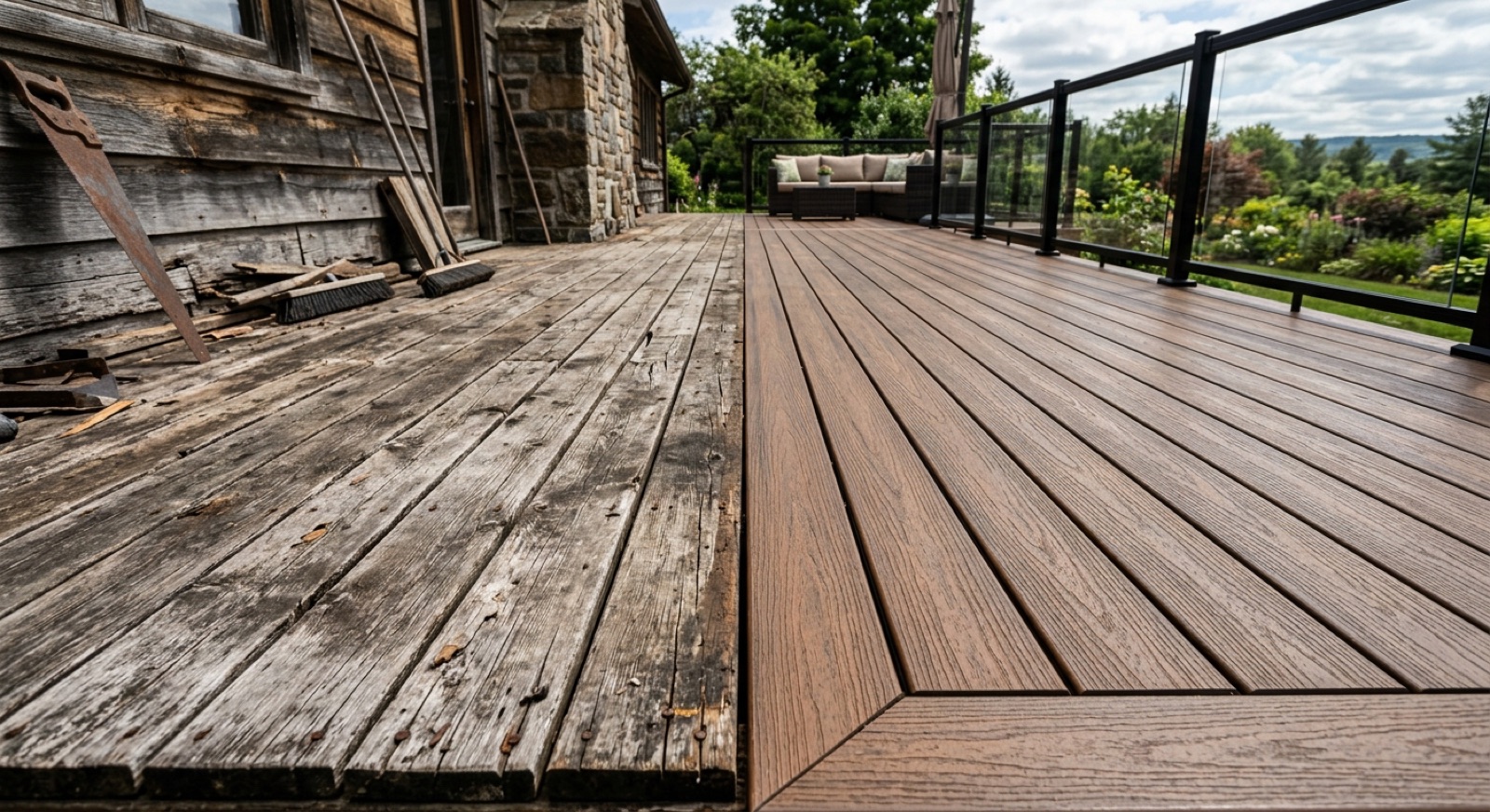
New Surface, Same Structure, Major Savings
If your deck boards are worn, splintered, warped, or faded but the structure underneath is still solid, deck resurfacing is the smartest investment you can make. Instead of tearing down the entire deck and starting from scratch, we remove only the surface boards and replace them with brand-new decking material. You get the look and feel of a completely new deck at 30 to 40 percent less than a full rebuild.
Resurfacing is particularly popular among homeowners in Rock Hill, Fort Mill, Tega Cay, and the surrounding area who built pressure-treated wood decks 10 to 15 years ago. The surface boards have reached the end of their useful life, but the underlying joists, beams, and posts -- which are the most expensive components of any deck -- are still in excellent structural condition. Resurfacing lets you capitalize on that existing investment while upgrading to a better-performing surface material.
The Resurfacing Process
Every resurfacing project begins with a thorough inspection of your deck's substructure. We check every joist, beam, post, and connection point for signs of rot, insect damage, and structural weakness. We test the ledger board connection where the deck attaches to your house, verify that the footings are stable, and confirm that the joist spacing is compatible with your chosen replacement material.
Once the substructure is cleared, we remove all existing decking boards, fascia, and stair treads. This step also gives us access to address any minor substructure issues we identified during the inspection, such as adding joist hangers where they're missing, sistering a joist that shows early signs of wear, or replacing a single compromised board. These small repairs during resurfacing prevent bigger problems down the road.
With the substructure prepared, we install your new decking material using the manufacturer-specified fastening system. For composite boards, this means hidden fastener clips that create a smooth, screw-free surface. For wood, we use coated deck screws with proper spacing for expansion. We also replace stair treads, add new fascia boards, and address the railing system if it's included in the project scope. Most resurfacing projects are complete in 2 to 5 days.
Resurfacing Material Options
The most popular choice for deck resurfacing is upgrading from old pressure-treated wood to composite decking. This gives you the dramatic visual transformation of a new deck surface plus the long-term benefit of zero maintenance. But composite is not the only option. We resurface decks with several material types depending on your goals and budget.
- Composite (Trex, TimberTech): The premium resurfacing choice. Eliminates future maintenance entirely. Wide range of colors and wood-grain textures. 25-year warranties against fading and staining. Best long-term value.
- PVC Decking: Contains no wood fiber at all, making it completely impervious to moisture. Ideal for pool decks and areas with constant water exposure. Slightly higher cost than standard composite.
- New Pressure-Treated Lumber: The most affordable option. Replace worn boards with fresh, kiln-dried treated lumber and a new coat of stain. Good choice for homeowners on a tight budget who are comfortable with ongoing maintenance.
- Cedar: A natural upgrade from pressure-treated pine. Beautiful grain and natural rot resistance. Moderate cost between treated lumber and composite.
Cost Savings and Candidacy
The economics of resurfacing make it one of the best values in home improvement. The substructure of a deck, consisting of concrete footings, support posts, beams, joists, and hardware, accounts for 40 to 60 percent of the total cost of a new deck. When you resurface, you skip all of that expense and pay only for the new surface material, fasteners, and labor to install them.
For a typical 300 square foot deck, here's how the numbers compare. A full tear-down and composite rebuild costs $15,000 to $25,000. Resurfacing the same deck with composite costs $8,000 to $15,000. That's a savings of $5,000 to $10,000 or more, with an identical end result on the surface you actually see, touch, and use.
The key factor for candidacy is the condition of your substructure. We look for solid joists without rot or significant cracking, stable posts and footings, a secure ledger board connection, and joist spacing that meets the requirements of your chosen replacement material. If your deck passes this inspection, resurfacing is the way to go. Schedule a free inspection and we'll give you a clear recommendation with photos and a detailed estimate.
Frequently Asked Questions
Deck resurfacing is the process of removing your existing deck boards and replacing them with new decking material while keeping the existing substructure (joists, beams, and posts) in place. It gives you a brand-new deck surface at a significantly lower cost than a full rebuild because you're reusing the structural framework underneath.
Deck resurfacing typically costs 30 to 40 percent less than a full tear-down and rebuild. For a 300 square foot deck, resurfacing with composite runs $8,000 to $15,000 versus $15,000 to $25,000 for a complete new build. The exact savings depend on the condition of your substructure and the material you choose for the new surface.
Not every deck is a candidate for resurfacing. The substructure must be structurally sound with no significant rot, insect damage, or code violations. We perform a thorough inspection before recommending resurfacing. If more than 20-30% of the joists need replacement, a full rebuild usually makes more financial sense.
Yes, switching from wood to composite is the most popular resurfacing upgrade. The existing joist structure works with composite decking as long as the joist spacing meets manufacturer requirements (typically 16 inches on center). We verify spacing and add blocking or sister joists if needed to meet composite specifications.
Most deck resurfacing projects are completed in 2 to 5 days depending on the size of the deck and whether any substructure repairs are needed. This is significantly faster than a full rebuild, which typically takes 1 to 3 weeks. Your yard disruption is minimized and you're back to using your deck sooner.