
Safety, Style, and Code Compliance
Deck railings serve two essential functions: they keep your family safe, and they define the visual character of your entire outdoor space. The right railing system can transform a basic deck into an architectural feature, while the wrong one can make an expensive deck look cheap. At Rock Hill Decks, we install railing systems that meet every safety code requirement while enhancing the design of your deck.
South Carolina building code requires railings on any deck surface that is 30 inches or more above the ground. The top rail must be at least 36 inches high, balusters must be spaced no more than 4 inches apart, and the system must withstand a 200-pound load applied in any direction at the top rail. These are minimum safety requirements, and we build to meet or exceed all of them on every installation across Rock Hill, Fort Mill, Tega Cay, York, Indian Land, Lake Wylie, and Clover.
Wood Railings: Classic and Versatile
Wood railings remain the most popular choice for deck construction because they offer maximum design flexibility at a moderate cost. We build wood railings from pressure-treated lumber or cedar, with options for turned balusters, square balusters, horizontal boards, and custom patterns. Wood railings can be stained to match your deck or painted to match your home's trim for a cohesive look.
The trade-off with wood railings is maintenance. Like wood decking, wood railings need to be stained or painted every 1 to 3 years to prevent weathering and maintain their appearance. We use premium exterior-grade stains and paints that offer UV and moisture protection to maximize the interval between maintenance cycles. For homeowners who want the look of wood without the upkeep, composite railings offer an excellent alternative.
Composite and Aluminum Railings
Composite railing systems from brands like Trex, TimberTech, and Fiberon offer the appearance of painted wood with none of the maintenance. These systems use the same engineered polymer technology as composite decking boards, which means they won't rot, warp, crack, splinter, or need repainting. They're available in a wide range of colors including white, black, bronze, and various wood-tone finishes.
Aluminum railing systems are the ultimate low-maintenance option. Powder-coated in a factory finish that resists fading, scratching, and corrosion, aluminum railings essentially never need attention beyond occasional cleaning. They're available in profiles that range from traditional to ultra-modern, with thin pickets that maximize visibility and a clean, architectural appearance.
Aluminum is also the strongest railing material per unit of weight, which means the posts and rails can be slimmer than wood or composite equivalents while still exceeding code requirements. This translates to a more open, less obstructed view from your deck. We install pre-assembled aluminum panels from brands like Deckorators, Fortress, and RDI, ensuring a factory-quality finish with fast installation times.
Cable Railings: Maximum Visibility
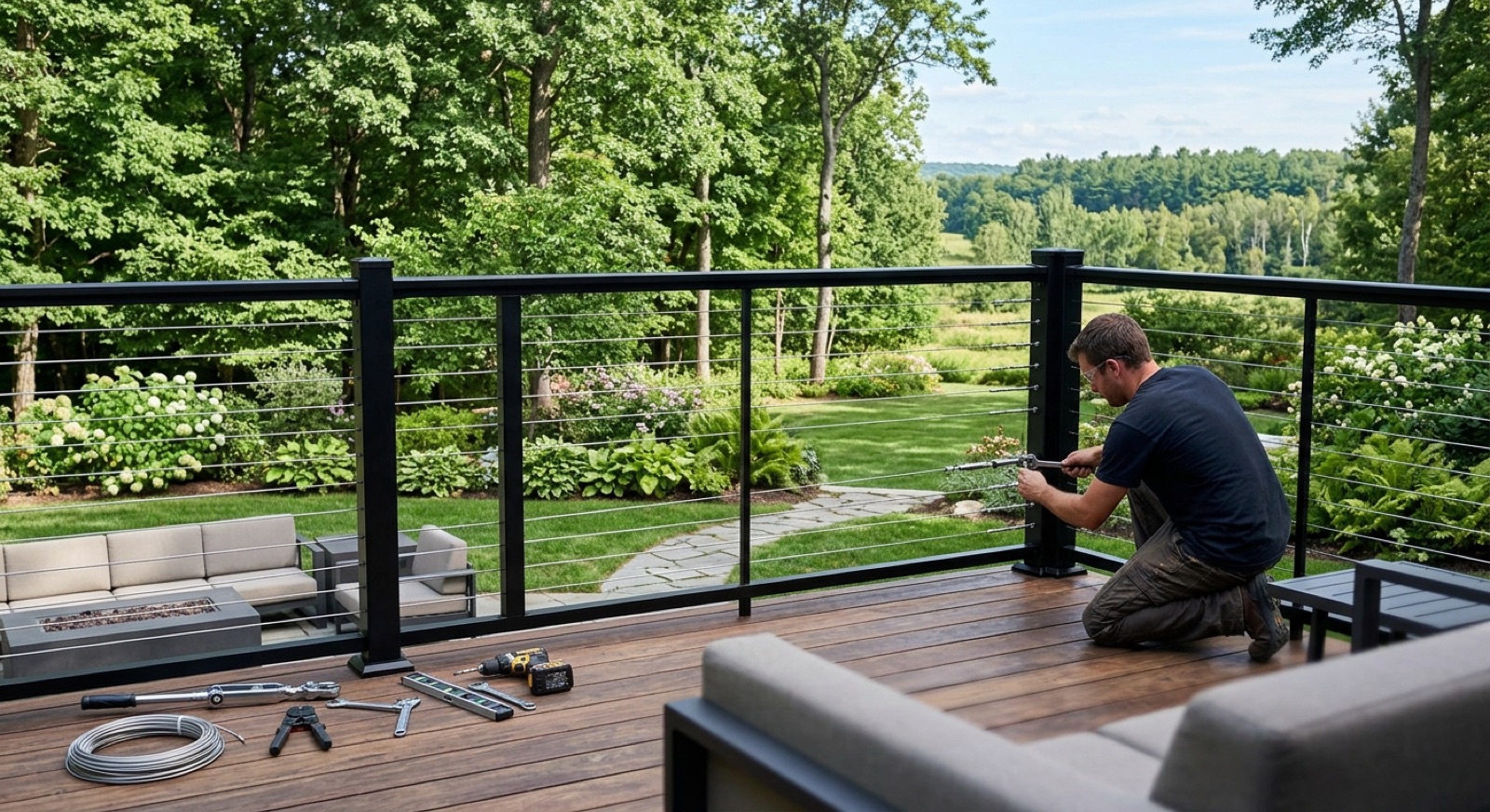
Cable railing systems use horizontal stainless steel cables in place of vertical balusters, creating an unobstructed view that is especially prized on decks with scenic surroundings. If your Rock Hill area home overlooks a wooded lot, a lake, or a landscaped yard, cable railings let you enjoy the view without visual barriers.
We use marine-grade 316 stainless steel cables and commercial-grade tensioners that resist corrosion in our humid climate. The posts can be wood, composite, aluminum, or steel depending on your design preference. Cable railing systems are code-compliant when installed with proper cable spacing (no more than 4 inches apart) and maintained at appropriate tension. We provide instructions for simple tension adjustment that homeowners can perform with a basic wrench.
Frequently Asked Questions
South Carolina follows the IRC building code, which requires railings on any deck surface 30 inches or more above grade. Railings must be at least 36 inches high for residential decks, and balusters must be spaced no more than 4 inches apart to prevent children from passing through. Railings must also withstand a 200-pound lateral load at the top rail.
Deck railing costs vary by material and linear footage. Pressure-treated wood railings run $20 to $35 per linear foot installed. Composite railings cost $30 to $60 per linear foot. Aluminum railings range from $40 to $70. Cable railing systems are $50 to $100+ per linear foot. A typical 100 linear foot railing project costs between $2,000 and $10,000.
Aluminum railings require the least maintenance of any railing material. They are powder-coated to resist fading, corrosion, and scratching, and never need painting or staining. Composite railings are a close second, requiring only occasional cleaning. Cable railings need periodic tension adjustment but no painting or staining.
Absolutely. Railing replacement is one of our most popular services. We remove the old railing system and install new posts, balusters, and top rails without disturbing the deck surface. This is an excellent way to update the look of your deck for a fraction of the cost of a full rebuild. Most railing replacements are completed in 1 to 2 days.
Yes, cable railings are code-compliant and safe for homes with children when properly installed. The cables must be spaced no more than 4 inches apart (the same requirement as balusters) and maintained at proper tension so they cannot be spread apart. We use marine-grade stainless steel cables and commercial-grade tensioners to ensure long-term safety.